
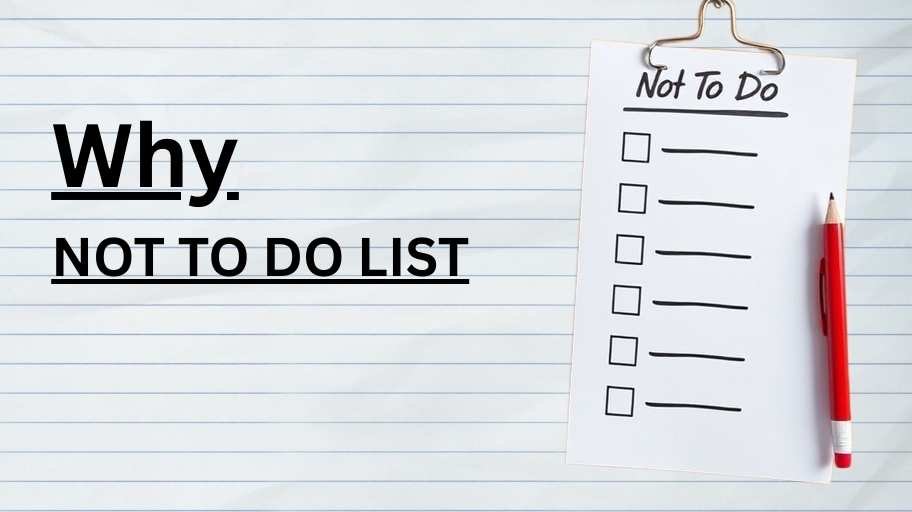
Why I Started Writing a Not-To-Do List and How It Changed My Focus
Look I will be honest up front, I used to think more lists = less messy life. I really carried a rolling to-do note in my phone like a emblem. Every morning I copied the old list, added a few things on to it, checked things off, felt briefly heroic and then, most days, felt a small, steady hum of anxiety that I hadn’t done enough. Sound familiar? That was me for years.
Then I tried something different: I started writing down the things I would never do. Not because I’m suddenly disciplined enough to never slip, but because naming what drains me put boundaries around the day. That simple inversion flip the question from what will I do? to what will I refuse to let steal my time? changed how I focused. but didn’t feel like another productivity hack, felt like clearing the furniture out of a cramped room so I could finally move.
Why a not-to-do list actually helps
There’s something about writing a rule in stone (or on sticky notes) that removes the little debates you have with yourself all day. Instead of deciding every two minutes whether to answer an email, scroll, or say yes to a meeting, you already have a rule: I don’t check email first thing, or No meetings without an agenda. That frees up decision energy for the things that matter.
It also makes patterns obvious. When I kept a short log of mistakes little slips like getting pulled into YouTube at 3 p.m., saying yes to extra tasks, or over-polishing a draft. I noticed the same triggers popping up. Once they were visible, they were a lot easier to stop. Naming the repeat offenders felt less like punishment and more like a cheat code: notice the trap, build a tiny barrier, then walk a different path.
So lets talk about How to build not-to-do list, I spend thirty minutes looking back over the last few weeks and pick the handful of habits that quietly eat my focus. Then I did turn them into short, action rules I can follow.
Some Examples that worked for me:
-don’t open email before 10 a.m
-no scrolling during deep work
-decline meetings without agendas
-don’t fix things beyond what’s necessary.
-Just one tiny tip that helped me stick to it:
- keep the list visible phone wallpaper, a sticky on the monitor, whatever yore meetings are without an agenda u won’t ignore.
When you say no to things ahead of time, you give yourself permission to be selfish with your attention. That’s the core of the trick.
| I stopped doing | What happened |
|---|---|
| Checking email first thing | I started mornings with an hour of uninterrupted writing |
| Saying yes to every meeting | Blocked two hours daily for deep work |
| Chasing every new idea | Pulled important items from a backlog when ready |
Why this isn’t about perfection?
A not-to-do list isn’t a shrinking violet’s moral code. It’s an instrument. I still game, I still watch dumb TV, I still procrastinate sometimes. The difference is I’m less likely to let those things hijack the chunks of time where I need to actually think. When I do fail yes, you will the list lets me come back without shame because it’s a tool, not a verdict.
There’s also this subtle mental shift: once you accept that some hours are for protective rules, it’s easier to be generous with yourself elsewhere. I used to believe the only way out of guilt was to get more done. Now I know letting go of low-value things can reduce the guilt without increasing toil.
Alternatives I tried
People swear by different setups backlogs, Kanban boards, user-story thinking, or scheduling blocks. I found a hybrid worked best: keep a backlog for ideas so they aren’t nagging in my head, time-block for the big stuff, and maintain one short not-to-do list that I review weekly.
The BIGGEST point here is systems should serve you, not the other way around. If a tool creates more anxiety, chuck it or change how you use it. My not-to-do list got me clarity; the backlog kept my curiosity safe.
When I first wrote no meetings without an agenda on my list, I felt kind of mean. Turns out it’s not mean it’s efficient.
Saying no politely released & rescued me to do the work that actually moved my projects forward. And yes, I sometimes still open my phone at 3 p.m. But because I’ve named that impulse, I catch it sooner and redirect myself faster.
FAQS
-Do not-to-do lists make you rigid and joyless?
Not if you keep them short and honest. The goal is focus, not punishment. Include things that truly sap your energy not small pleasures you enjoy.
-Won’t a do not do list just make me feel guilty when I fail?
Only if you treat it like moral law. Treat it as a boundary. Expect failures. When they happen, look for the trigger and tweak the list don’t shame yourself.
-How many items should be on the list?
A handful. I keep mine to about 5–10 items. If it’s longer, it becomes another monster list to manage.
-How often should I review it?
Weekly check-ins work for me. Rules evolve: some things get removed, others added. The list is a living tool.